
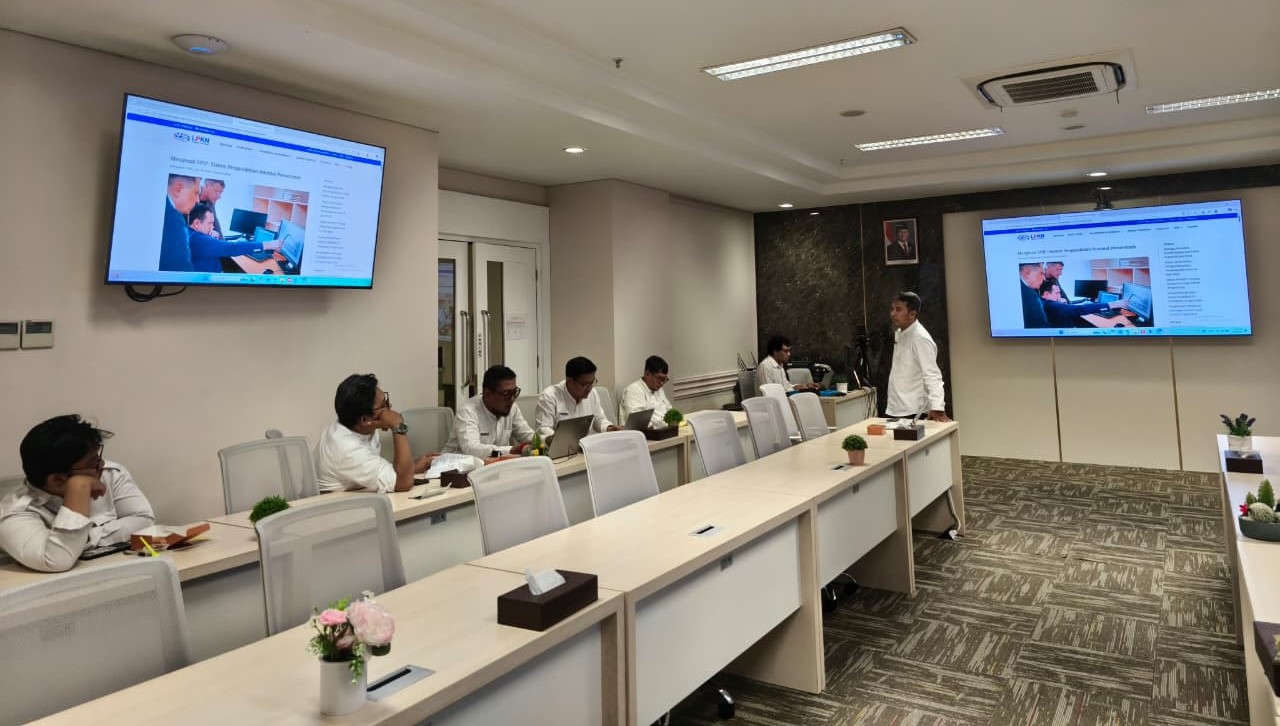
The Faculty of Pharmacy, Universitas Airlangga (FF UNAIR) continues its efforts to build institutional governance that is professional, transparent, and accountable. One concrete step toward this was the Integrity Zone (Zona Integritas/ZI) meeting held on Friday (22/5/2026) in the session room of the Nani Building, FF UNAIR.
The meeting was attended by faculty leadership alongside the FF UNAIR Integrity Zone team. The session ran actively and constructively, with discussions centered on various strategies for strengthening the implementation of the Integrity Zone across the faculty.
One of the main focuses was the consolidation and preparation of supporting documents for Integrity Zone implementation. The team discussed administrative and technical requirements to ensure that all evidence and supporting documents are compiled systematically and in accordance with established standards.
The meeting also emphasized the importance of understanding the operational definitions within each Integrity Zone area. This included clarifying the types of activities that can be reported under each area, so that all units share a consistent understanding of the implementation and reporting process.
Strengthening service workflows was another key point of discussion. FF UNAIR is working to ensure that all services run more effectively, in an orderly manner, and are easily accessible to both the academic community and the general public. This effort is expected to support improvements in public service quality within the faculty.
Beyond that, the team also discussed the importance of documenting every stage of activities, from preparatory meetings and program implementation through to monitoring and evaluation (monev) across each area. Thorough documentation is seen as an essential part of sustaining the Integrity Zone program over the long term.
Through this meeting, FF UNAIR also worked to align understanding across units so that all sections operate to the same standards in running the Integrity Zone program. This step was taken to foster stronger coordination and more optimal program implementation.
On the same occasion, an evaluation was conducted on several areas that still have room for development. The aim was to ensure that Integrity Zone implementation goes beyond the administrative level and delivers real impact in creating services that are more transparent, orderly, and accountable.


